What Makes a Cat Tree Suitable for Large Cats?
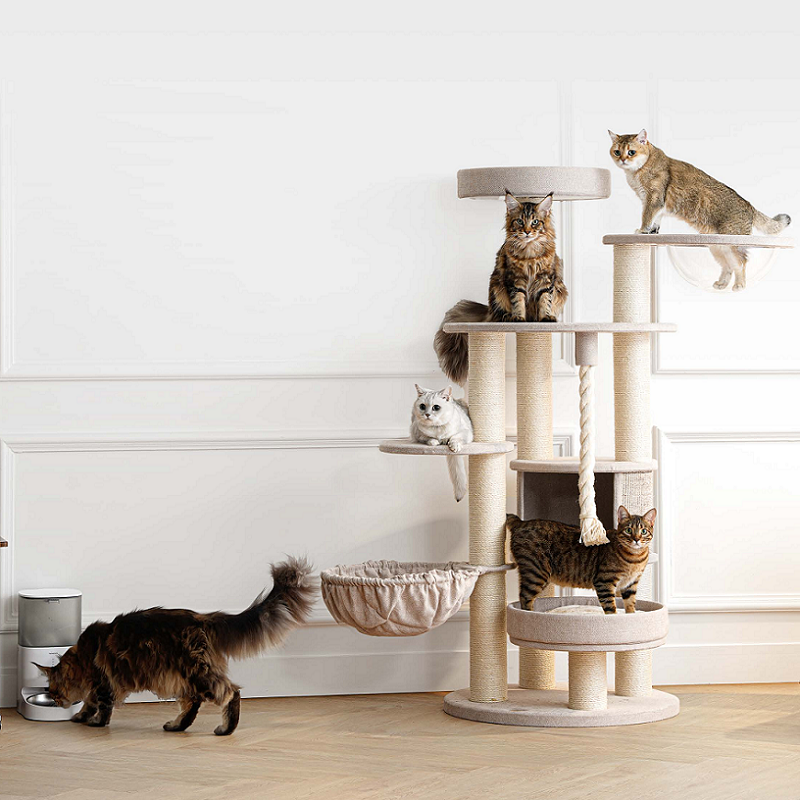
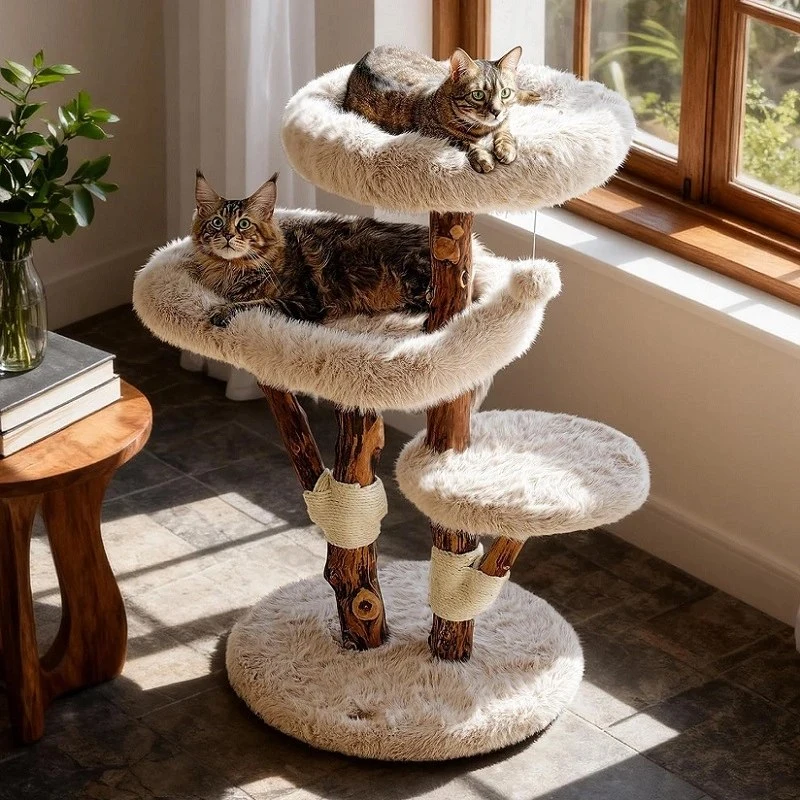
A cat tree for bigger cats needs to provide usable resting space, well-supported platforms and a practical route between levels. Overall height is only one part of the design. A tall tower can still have small perches, narrow entrances or awkward transitions.
Understanding how these features work together makes it easier to assess whether a cat tree suits an individual cat’s size, movement and resting habits.
Start With Body Size and Usable Space
Cats of a similar weight can differ in body length and build. They may also rest differently: one curls into a compact shape, while another stretches across a platform. For this reason, a weight recommendation alone does not describe the space a cat needs.
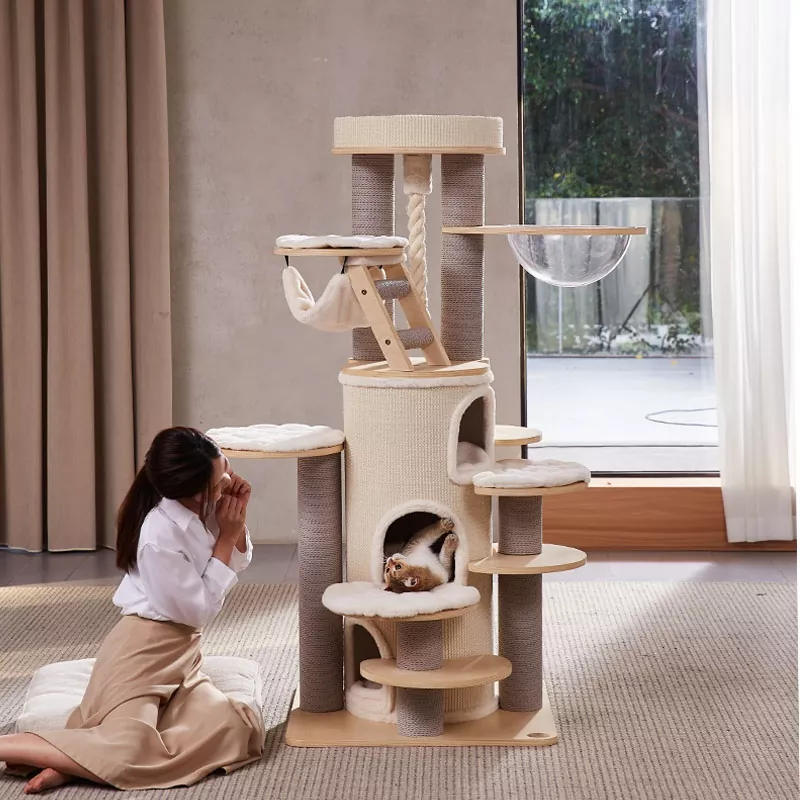
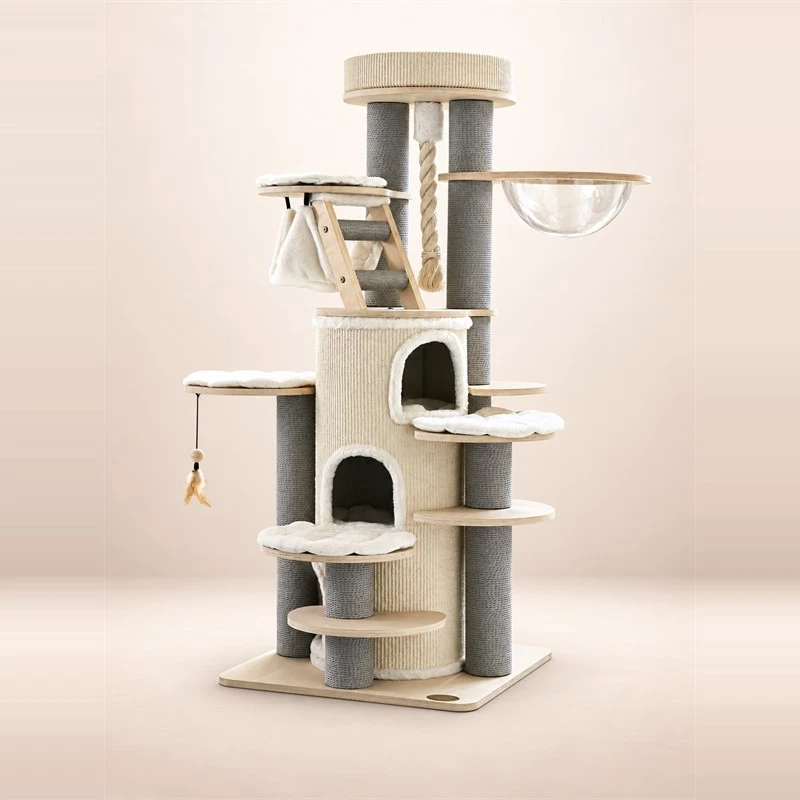
When comparing cat trees for large cats, look at the dimensions of the individual resting areas:
- Perches: Check the usable surface inside any raised edges, rather than the outside measurement alone.
- Enclosed spaces: Consider internal width, depth and height, as well as the entrance opening.
- Hammocks: Review their dimensions, attachment points and stated limits.
- Platforms: Notice whether posts or other structures reduce the available standing and turning space.
The overall footprint tells you how much room the product occupies at home. Usable dimensions tell you how much room it offers the cat. Both should be clear in the product information.
Consider Stability Across the Whole Structure
A sturdy cat tree for large cats depends on the relationship between its base, supports, platforms and connections. Thick-looking posts or a large base can be useful design features, but neither proves stability on its own.
Cats apply forces in different directions when climbing, landing or scratching. This is why the support beneath an elevated perch and the way parts connect deserve attention alongside the product’s appearance.
Follow the assembly instructions, place the tree on a suitable level surface and install any required wall attachment. Wall attachment should not be treated as a substitute for correct assembly.
If a product lists a load limit, check what that number covers. It may refer to one perch, a hammock or another specific component. A stated load limit should not be assumed to describe the capacity or stability of the entire cat tree.
Look at the Route Between Levels
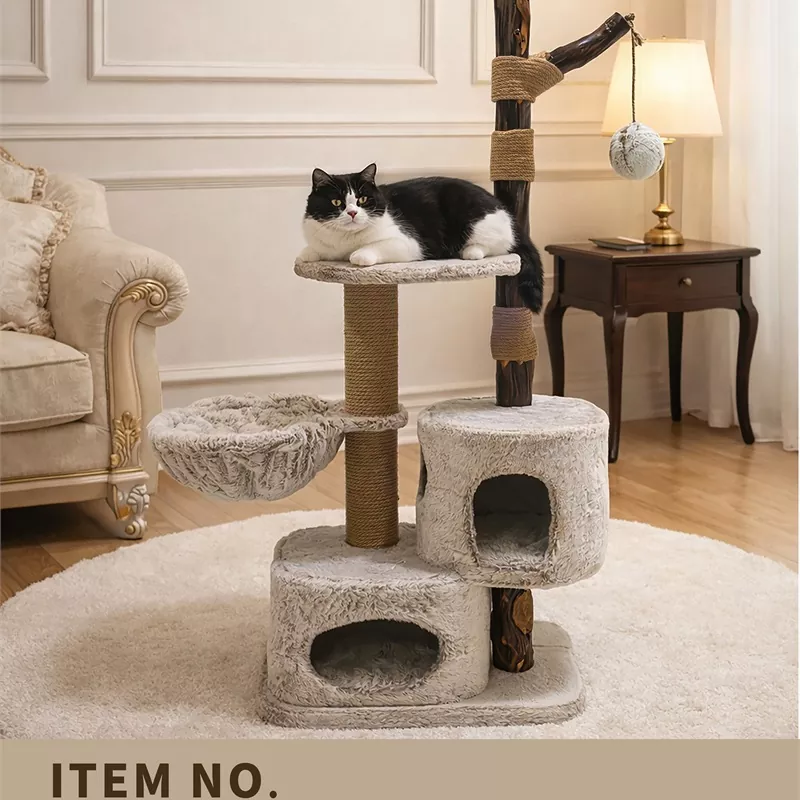
Height does not explain how easily a cat can reach a resting spot. The distance between platforms, the space available for landing and the position of nearby posts all affect the climbing route.
When examining a cat tower for large cats, trace the route from the floor to the upper platforms and back down. Look for clear access rather than judging only the number of levels.
A layout that suits an active adult cat may not suit a cat with limited mobility. Lower resting areas and shorter transitions may be more practical for some individuals. If a cat develops difficulty jumping or climbing, veterinary advice is more appropriate than assuming a different tower will resolve the problem.
Check the Usable Scratching Length
The total height of a cat tree is different from the length of its scratching surfaces. A tall structure may contain several short post sections, with platforms interrupting the space available for a full stretch.
Cats Protection recommends stable scratching posts that allow cats to stretch fully while scratching. For a bigger cat, pay attention to the uninterrupted, accessible scratching area, not just the height printed in the product title.
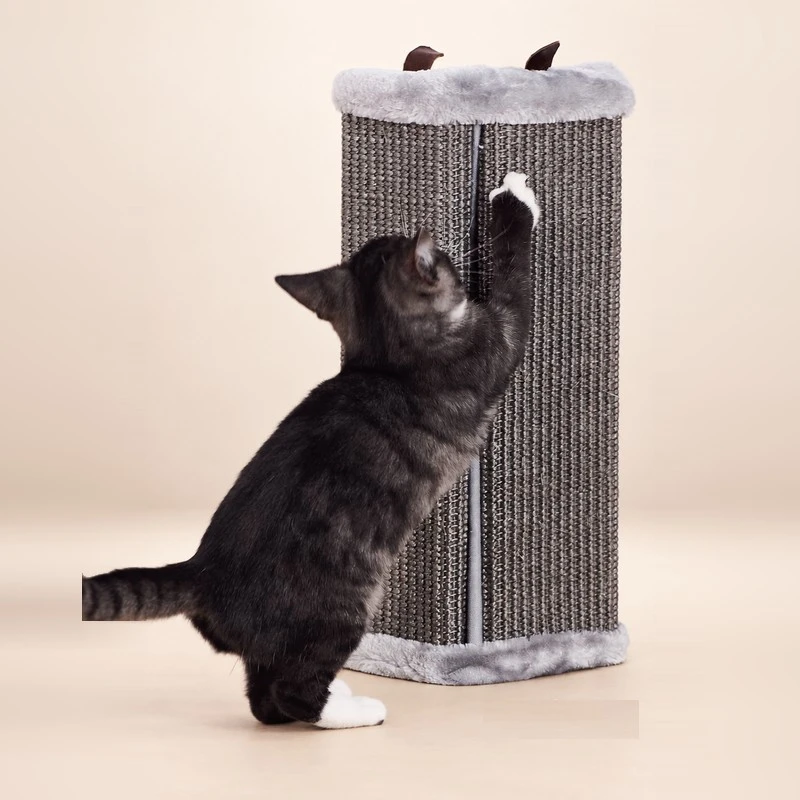
Preferences also vary. Some cats favour upright posts, while others use horizontal scratching surfaces. Separate Cat Scratchers can provide an additional option without requiring every activity to take place on the same structure.
Explore our Cat Trees collection to learn more about our designs, and refer to the specifications of each model when assessing its suitability.
Related News
Leave me a message
New Products
News Recommendations