Durable Cat Scratchers For Indoor Cat Claw Care And Furniture Protection
Petsbelle Cat Scratchers give retailers and brands a practical way to answer a behavior every cat owner recognizes. Instead of stocking one familiar format, buyers can build a range that covers different scratching directions, materials, floor-space needs and price levels.
This page is a category overview rather than a single product description. It helps importers, distributors and private-label teams decide which scratching formats belong together, how they complement a wider cat furniture collection and what to confirm before sampling.
Start with the Behavior, Not the Product Name
Cats scratch for claw maintenance, body stretch and territory marking. The position a cat adopts while scratching varies, and that variation is what makes a mixed assortment more useful than a single repeated design.
One cat may lean into a vertical surface and pull downward. Another may push forward along a flat textured pad. A third may scratch briefly, then settle on the same surface to rest. Each pattern points to a different product format and a different retail message.
Buyers who begin with these behavior patterns can assign a clear role to every SKU. The result is a range where each item answers a recognizable need instead of duplicating the same idea in another color.
A Category Built from Four Buying Roles
Rather than grouping products only by material, it helps to think about the commercial role each scratching item plays in a collection. Four roles cover most retail needs.
Role One: The Accessible First Purchase
Compact, low-cost scratching items suit shoppers who are buying their first scratcher or adding a second surface in another room. A flat cardboard pad or a short sisal post often fills this position. Light weight and simple placement matter more here than feature count.
Role Two: The Everyday Main Scratcher
This is the item a household relies on daily. It usually offers a generous scratching area, a stable stance and a size that fits a main living space. A medium or tall sisal post, or a wave-shaped cardboard design, can occupy this position depending on the target market.
Role Three: The Combined-Function Piece
Some shoppers want scratching to come with something else: a perch, a cave, a hammock or a top platform. Scratching barrels and posts with platforms sit in this role. These products carry a higher price point and need clearer feature explanation at retail.
Role Four: The Space-Saving Solution
For apartments and compact rooms, wall-mounted scratching elements and floor mats offer scratching without claiming much floor area. This role also supports cross-selling with wall shelves and climbing systems.
Matching Format to Living Space
| Buying Role | Typical Format | Placement Consideration | Retail Message |
|---|---|---|---|
| Accessible first purchase | Flat cardboard pad, short sisal post | Fits beside furniture or in a small room | Simple, affordable scratching |
| Everyday main scratcher | Medium or tall sisal post, wave cardboard design | Needs stable floor space in a main room | Daily use with a full stretch |
| Combined-function piece | Scratching barrel, post with platform | Needs clearance around caves and perches | Scratch, rest and observe in one |
| Space-saving solution | Wall-mounted scratching element, sisal mat | Depends on wall type and mounting method | Vertical use without floor footprint |
Material Choices and What They Change
Cardboard and sisal dominate cat scratching products, but they are not interchangeable. Each brings a different texture, debris pattern, cleaning routine and visual character.
Corrugated cardboard offers a crisp resistance that many cats respond to, and it can be shaped into flat, wave or decorative forms at relatively low weight. It wears down over time, which is why reversible surfaces and replaceable formats appear in the range.
Sisal holds up to repeated contact and suits vertical structures. Rope wrapping and sisal carpet produce different surface feels and different finishing requirements. On taller posts, the wrapping method and post diameter affect both appearance and how much usable scratching area the cat actually gets.
Buyers should record the exact material, coverage area and finishing for each model. A general "sisal surface" note is not enough when two suppliers interpret it differently.
What Separates a Reliable Scratcher from a Weak One
Two products can photograph alike and still behave very differently in a home. The difference usually sits in details that catalogs rarely highlight.
- Stance under load: A post that shifts when a cat pulls against it will not be used confidently. Base size and weight need to match post height.
- Surface continuity: Gaps, loose wrapping or uneven bonding create early wear points.
- Edge treatment: Exposed cardboard edges and cut sisal ends affect both appearance and how quickly the product looks worn.
- Assembly clarity: Parts that are hard to identify lead to installation errors and after-sales questions.
- Packaging protection: Lightweight cardboard and wrapped posts both need protection from compression and moisture in transit.
These points are worth raising with any supplier before a wholesale program is confirmed, not only at the sample stage.
Building a Range Without Overlap
A common mistake is to fill a scratching category with near-identical items. A stronger approach assigns each product a distinct job and lets the collection read as a progression.
One practical structure moves from an entry item to a main scratcher, then to a combined-function piece, and finally to a space-saving or design-led option. Colors and materials can stay consistent across the four roles so the range still looks coordinated.
This structure also helps retail presentation. Shelf talkers, online filters and comparison tables can use the same four roles, making it easier for shoppers to understand why one scratcher costs more than another.
Working Alongside Other Cat Furniture
Scratchers rarely sell in isolation. They sit naturally beside climbing, resting and hiding products, and the category becomes more useful when those links are planned.
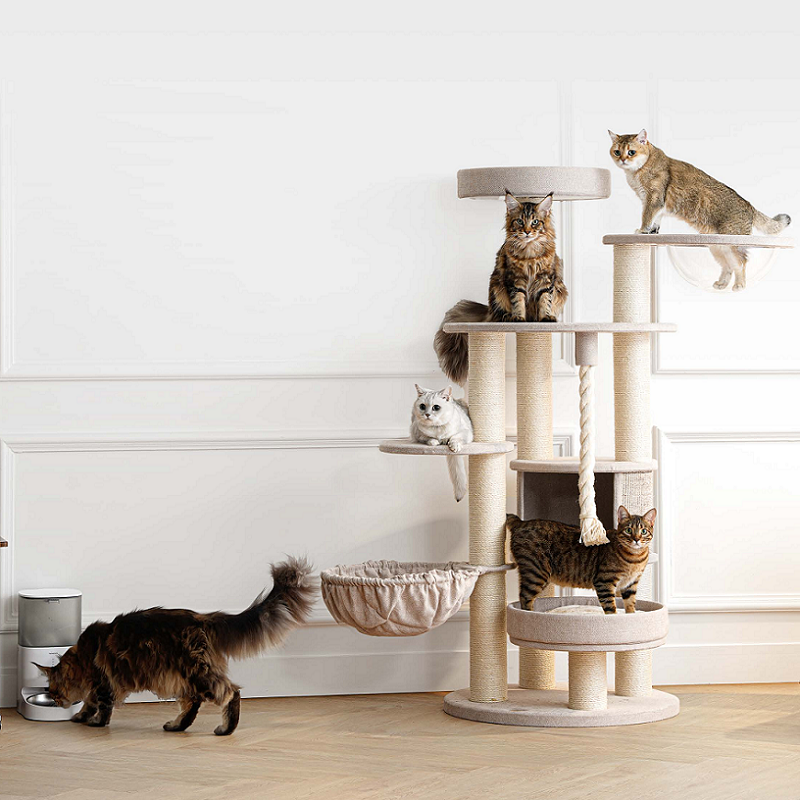
Sisal posts and scratching elements can be positioned as companions to Cat Trees, while barrels connect scratching with the hiding behavior covered in Scratching Barrels. Wall-mounted scratching pieces belong with Cat Wall Furniture, and floor-level cardboard options pair well with Scratching Boards and Scratching Posts.
Treating these as one connected collection gives buyers a clearer story than presenting each format as an unrelated item.
Sampling and OEM Notes for Cat Scratchers
Petsbelle works with importers, distributors, retailers and private-label brands from its base in Hangzhou, Zhejiang, China. Projects can cover format selection, material and color direction, printed patterns, labels, instruction sheets and retail packaging.
A sample review should look at more than the surface texture. Check dimensions, stance on a flat floor, edge finishing, assembly steps, packed volume and how the product reads once boxed or carded.
Customization scope and MOQ depend on the chosen format and materials. Buyers planning a coordinated range can discuss shared palettes and packaging across several scratching formats rather than treating each SKU separately.
FAQ
How many scratching formats should a retail range include?
There is no fixed number, but a range usually works best when each item has a distinct role. Covering an entry option, a main scratcher and one space-saving or combined-function piece is a common starting structure.
Is cardboard or sisal better for cats?
Neither is universally better. Cardboard tends to suit forward, horizontal scratching, while sisal supports upright stretching. Many households benefit from offering both textures.
How can buyers tell whether a scratching post is stable?
Look at base size and thickness in relation to post height, then test the assembled sample on a flat surface. A front-view photo alone cannot show this relationship.
Do scratching products need installation instructions?
Freestanding items benefit from clear placement and care notes. Wall-mounted scratching elements require installation guidance matched to the wall type and mounting hardware.
Can a scratching category share one visual identity?
Yes. A consistent palette, wood tone or packaging style can unify cardboard, sisal and combined-function products even when their formats differ.
Can Petsbelle develop a private-label scratching range?
OEM and private-label discussions can cover format selection, dimensions, materials, colors, labels and packaging. Feasibility and MOQ depend on the specific request.
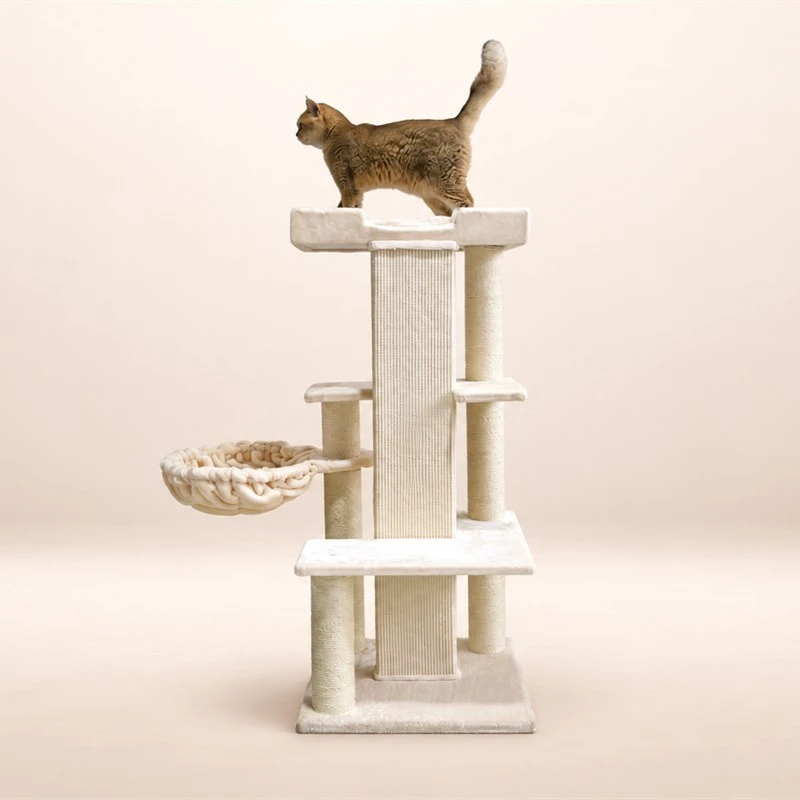
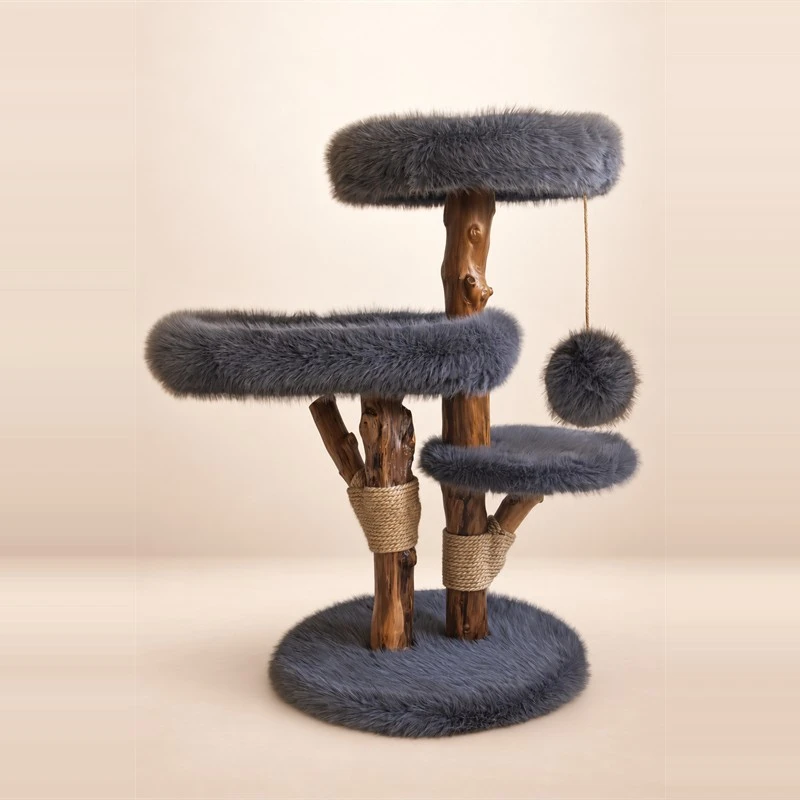
- View as
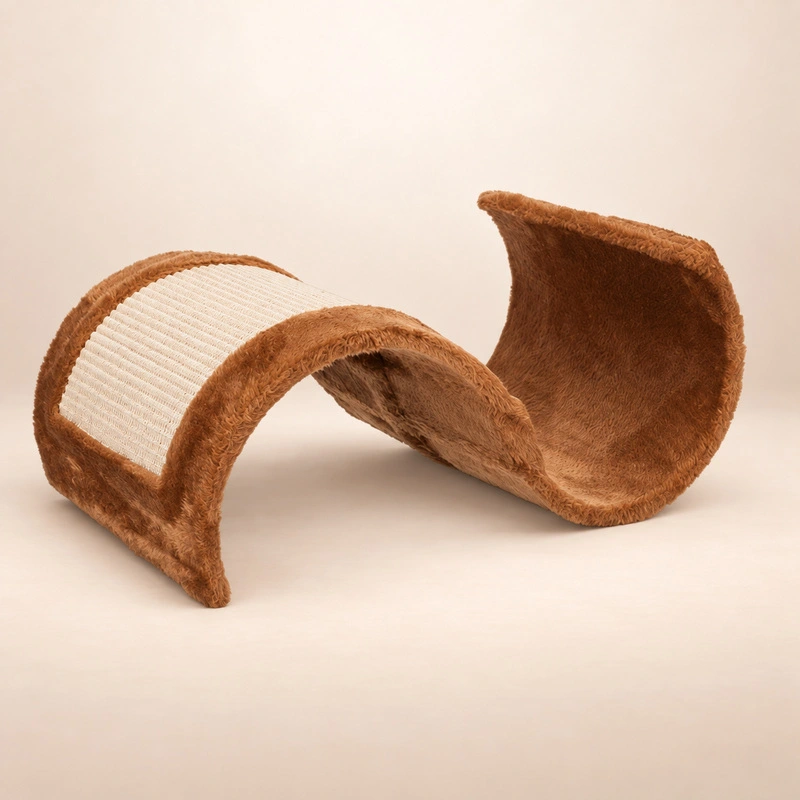
Wavy Cat Scratcher and Lounger with Sisal
Petsbelle SBE817 Wavy Cat Scratcher and Lounger with Sisal for wholesale buyers combines a curved sisal scratching zone with plush-covered contours. Its 20 x 25 x 52 cm ready-to-use form supports scratching, stretching and rest, with beige, brown, blue and black options.
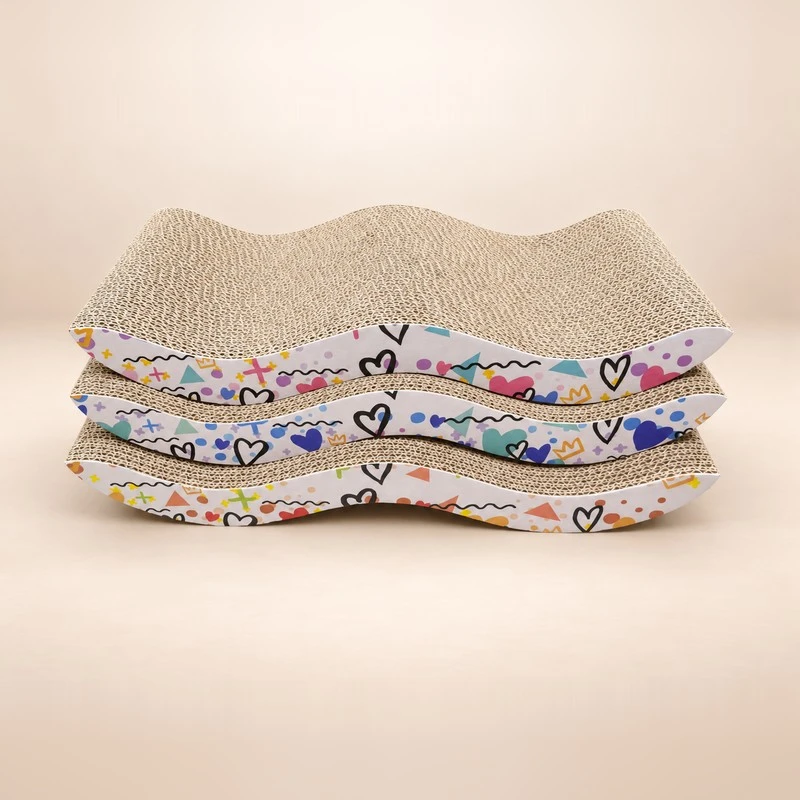
Wave Corrugated Cardboard Cat Scratcher
Petsbelle PSP524 Wave Corrugated Cardboard Cat Scratcher for wholesale sourcing features an S-shaped, double-sided design for horizontal scratching, stretching and resting. Its 45 x 23 x 7 cm lightweight format uses layered corrugated cardboard and can support custom printed side panels for retail collections.
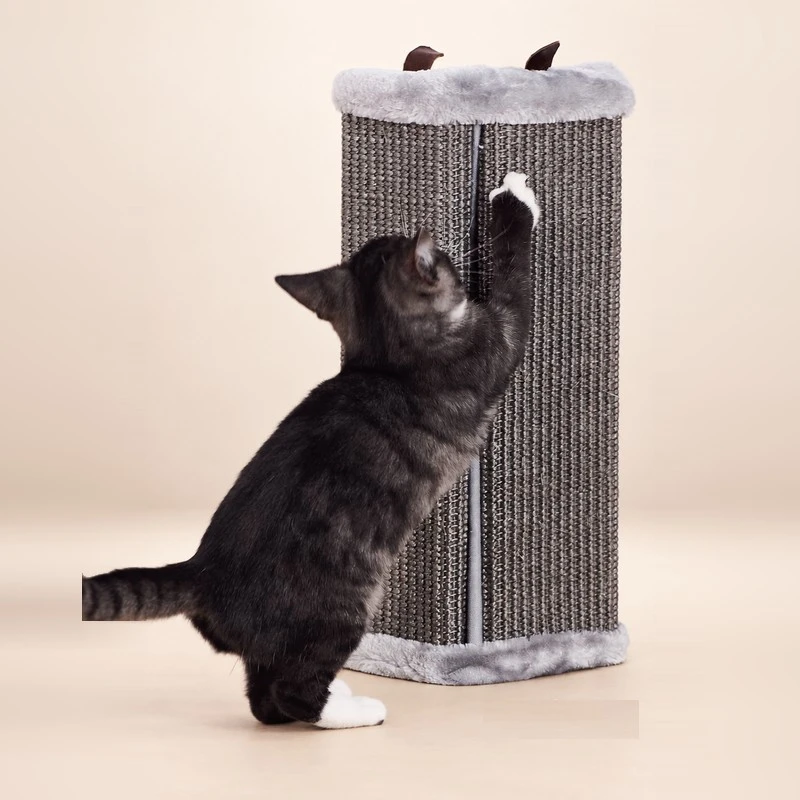
Cat Wall Corner Scratcher Furniture Protector
Petsbelle SBE821 Cat Wall Corner Scratcher Furniture Protector for wholesale buyers combines two sisal-covered MDF panels with plush trim and a flexible corner format. The 50 x 23 x 2 cm scratcher can be mounted flat, wrapped around a suitable corner or placed horizontally, with grey, brown and black options.
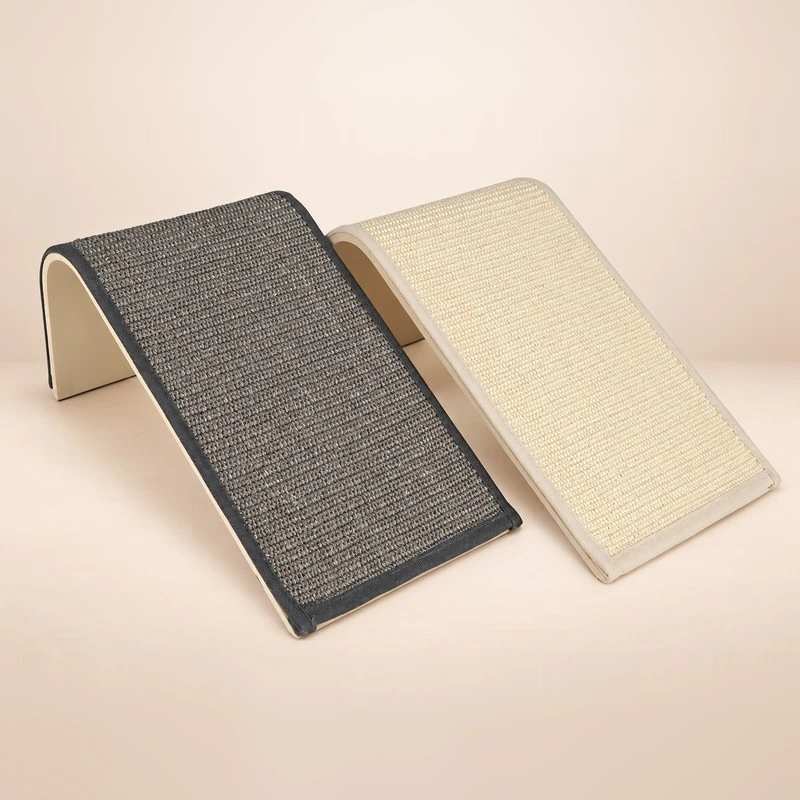
Angled Cat Scratcher Ramp
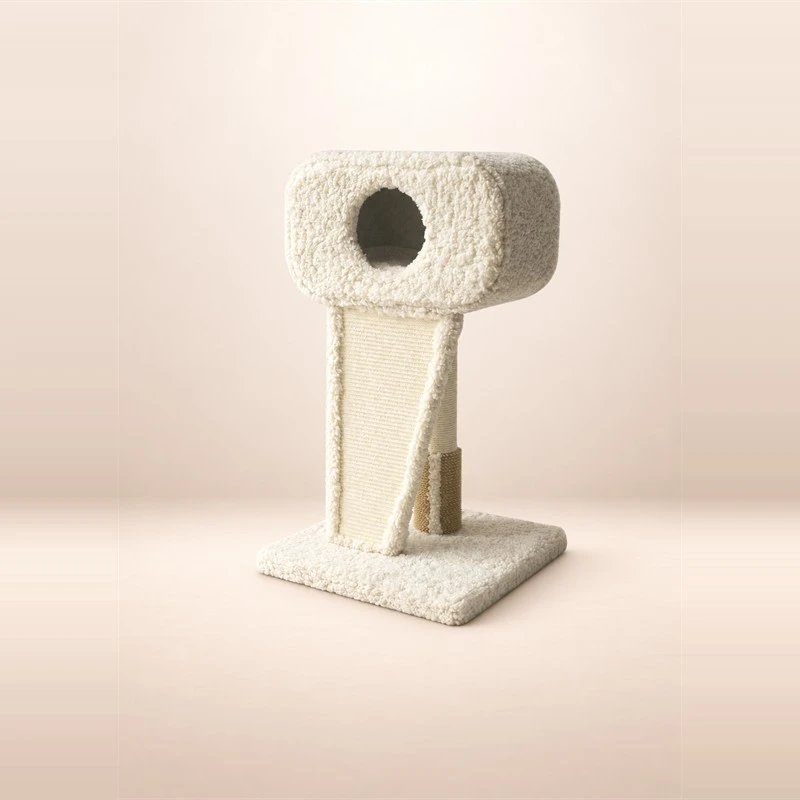
Petsbelle PSL0809 Angled Cat Scratcher Ramp for wholesale sourcing combines a continuous sisal carpet surface with a compact bent-wood incline. Its 38 x 23 x 17 cm format supports angled scratching and natural stretching while offering white and gray options for modern pet ranges.
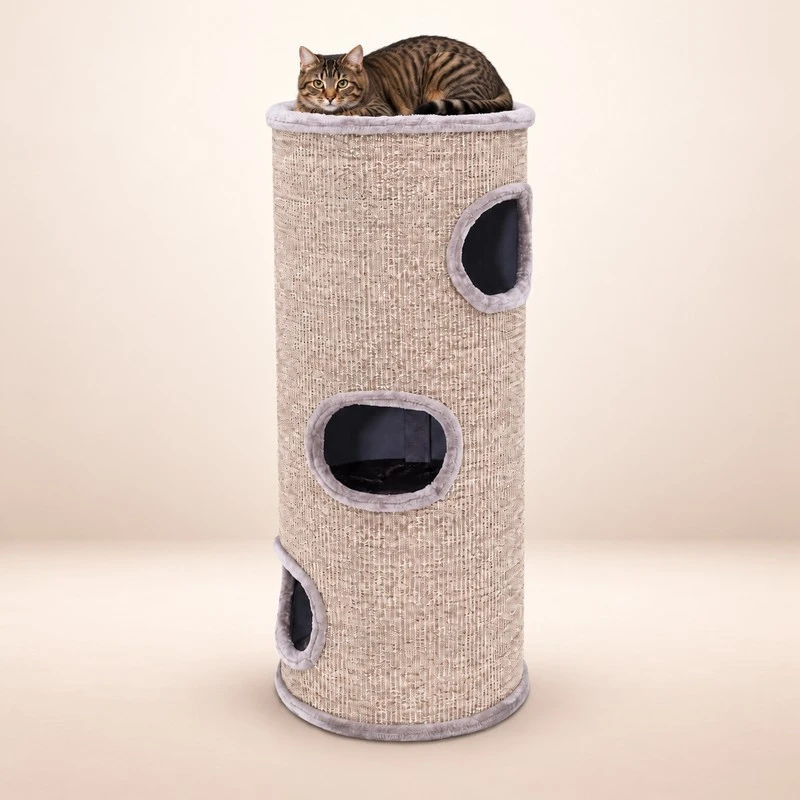
Sturdy 4-Tier Sisal Cat Scratching Barrel
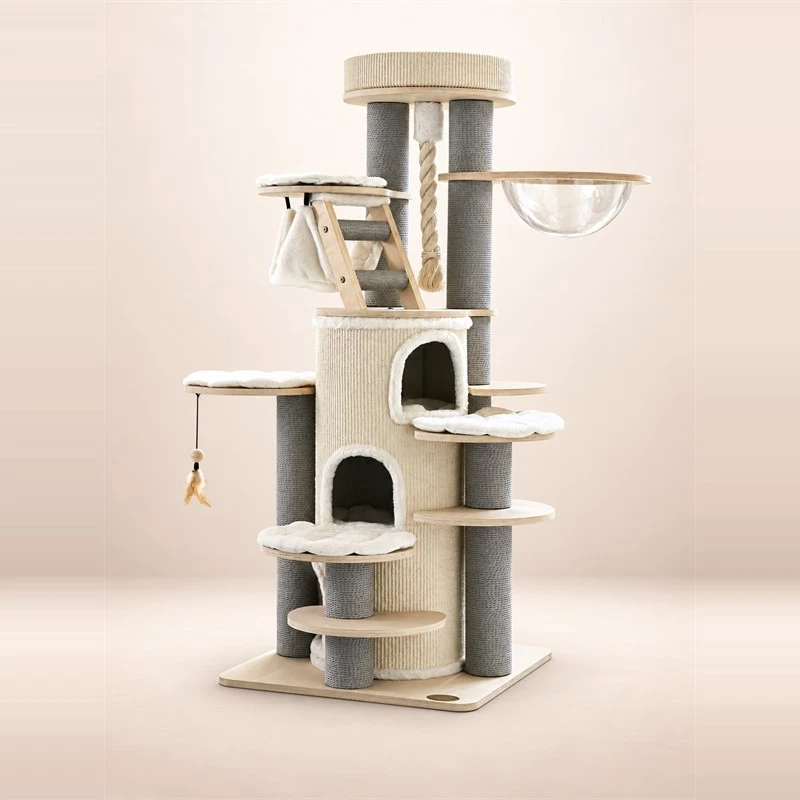
Petsbelle SBE1119-110 Sturdy 4-Tier Sisal Cat Scratching Barrel for wholesale sourcing combines a 110 cm vertical format, full-height sisal carpet, three side-access hideaways and a cushioned top perch within a compact 45 x 45 cm footprint for indoor cat furniture ranges and private-label projects.
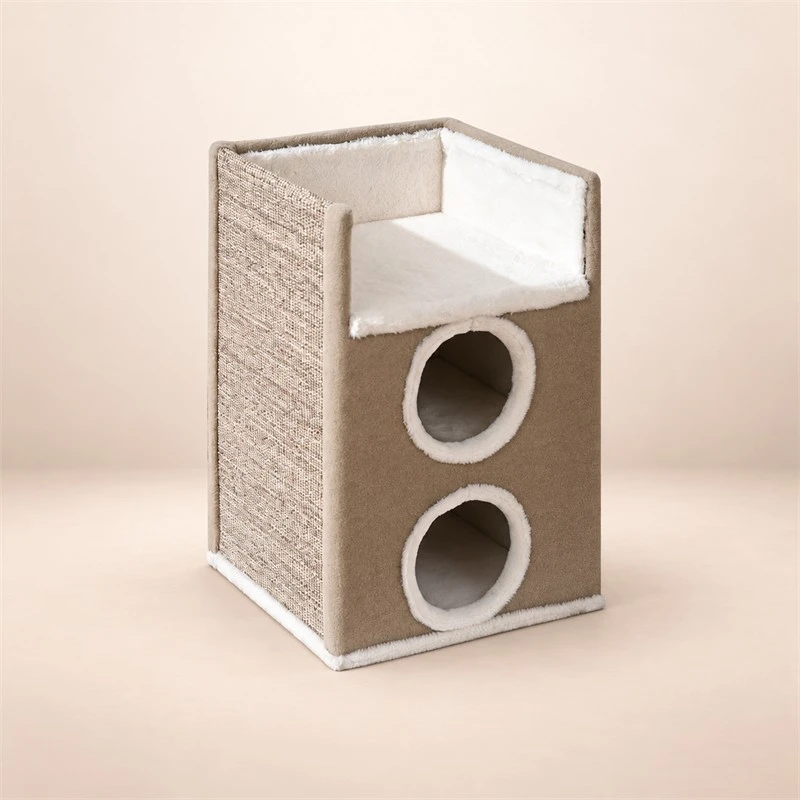
Cosy Lounge Cat Scratching Barrel with Sisal Carpet
Petsbelle PS1636 Cosy Lounge Cat Scratching Barrel with Sisal Carpet for wholesale sourcing combines two enclosed cave levels, a plush snow-top observation lounge and a full-height side scratching panel in a compact 40 x 40 x 66 cm ready-to-use structure with a stated self-weight above 20 kg.
With an experienced sales team, technical staff and after-sales follow-up, Petsbelle supports repeat Cat Scratchers programs for brands, importers and wholesalers.
News Recommendations