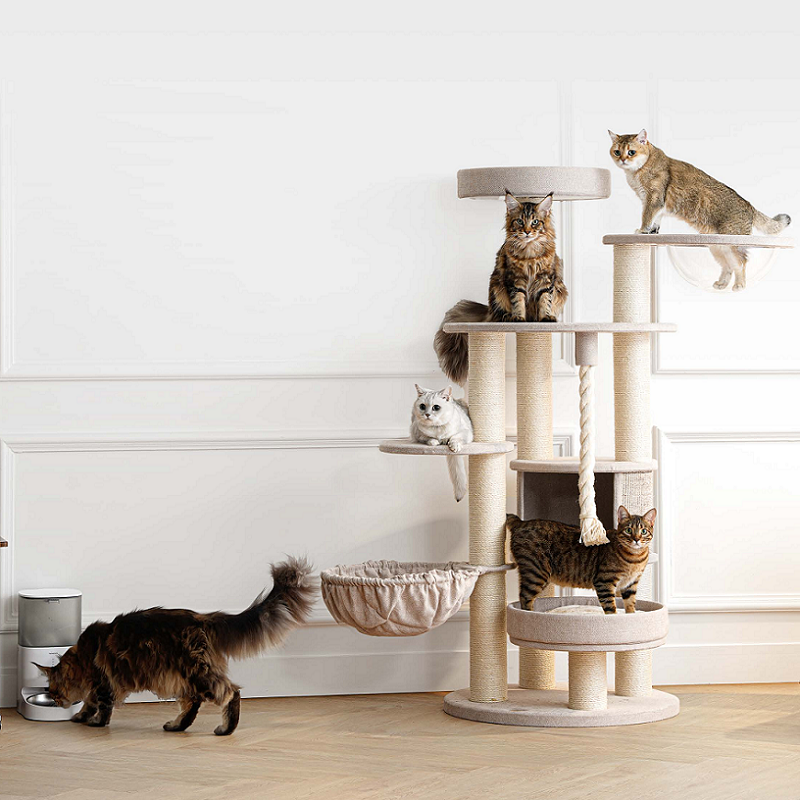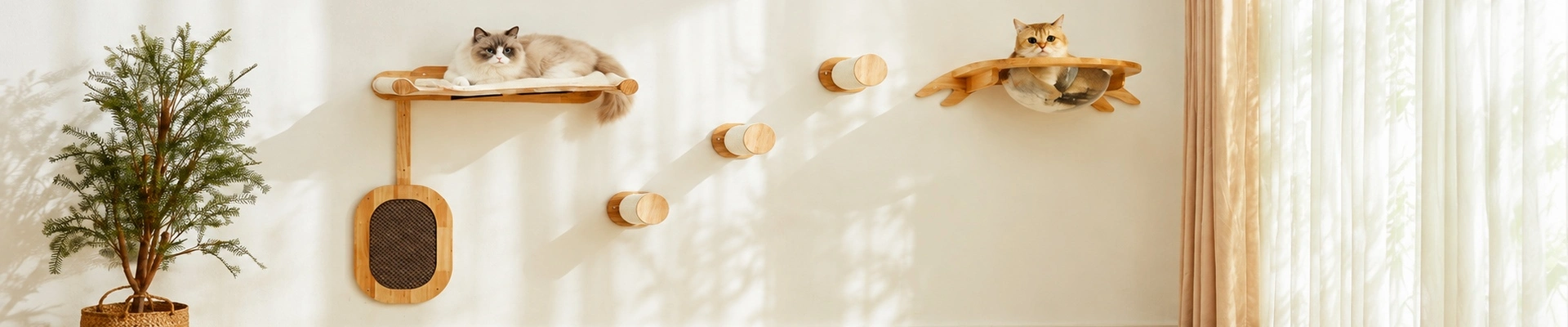
Wholesale Cat Trees for Climbing, Scratching and Resting
PETSBELLE wholesale Cat Trees help pet brands, importers and retailers build an indoor cat furniture range for climbing, scratching, resting and play. Our collection covers compact layouts, balanced everyday models and larger multi-level structures for different homes, price points and sales channels.
A cat tree is more than a tall piece of pet furniture. Platforms, posts, beds, condos, hammocks and scratching surfaces work together as one activity structure. A successful design considers how cats move from one level to another, where they pause, how the base supports the upper structure and how the product will be packed and assembled after delivery.
As a cat tree manufacturer and supplier, PETSBELLE develops original designs and selected patented styles. We support wholesale cat trees, OEM and ODM projects for larger-volume customers, while buyers starting with smaller quantities can discuss PETSBELLE brand distribution or agency cooperation.
What Are Cat Trees and What Do They Do?
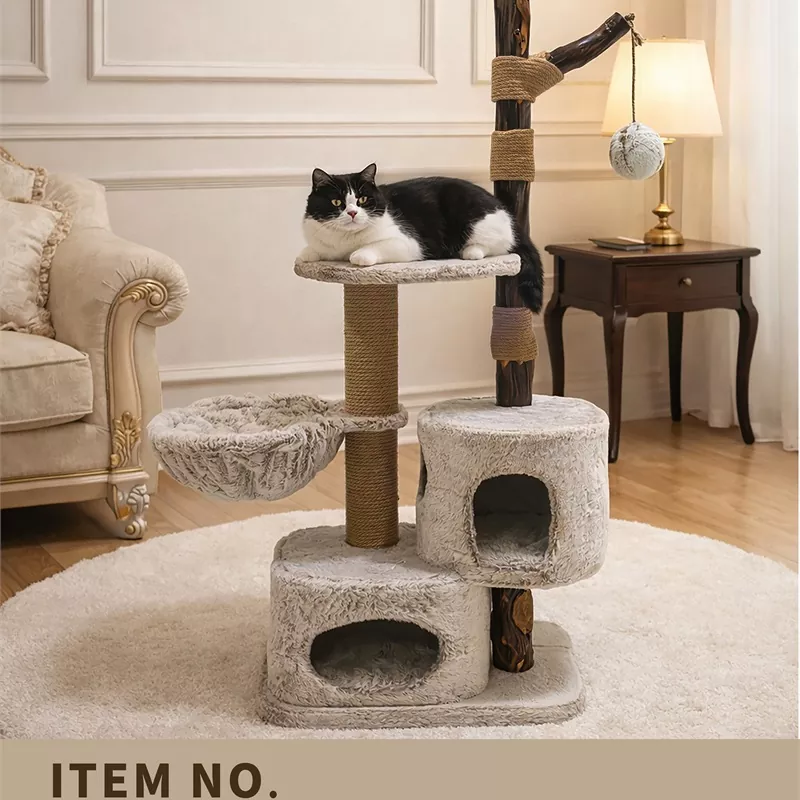
Cat trees are freestanding indoor structures that combine several normal cat activities in one product. Vertical levels create places to climb and observe; sisal-covered areas provide appropriate scratching surfaces; padded platforms, bowls, hammocks or enclosed condos provide different resting choices.
The value of cat furniture comes from the relationship between these functions. A high perch may attract cats that prefer an open view, while a condo offers a more sheltered space. A low step can improve access to an upper level, and a scratching post can also form part of the load-bearing structure. Buyers should therefore assess the complete activity route instead of counting features in isolation.
How to Choose Cat Trees for a Retail or Wholesale Range
How should a buyer choose cat trees when the catalog contains many similar-looking models? Start with the intended household, available floor area, desired retail position and the functions consumers can understand at a glance.
A well-planned assortment normally includes more than one scale. Small Cat Trees address limited spaces and entry-level purchases. Medium Cat Trees offer a broader mix of perches, scratchers and resting areas without requiring the footprint of a statement product. Large Cat Trees create more vertical territory and can support richer activity layouts for spacious rooms or multi-cat households.
Cat Tree Range Planning
| Category | Typical Role in the Range | Buyer Questions |
|---|---|---|
| Small Cat Trees | Compact, accessible indoor cat furniture | Is the footprint practical and is each function easy to reach? |
| Medium Cat Trees | Balanced everyday range with several activities | Does the layout combine scratching, climbing and resting clearly? |
| Large Cat Trees | Feature-rich, multi-level statement products | Are structure, packaging and assembly suitable for the model size? |
The category name should guide selection, but dimensions still need to be confirmed model by model. A wide compact tree and a narrow tall tree can behave very differently even when both are placed in the same marketing segment.
Materials and Construction Details Buyers Should Review
Common cat tree components include engineered wood or other board materials, fabric or plush coverings, sisal rope or sisal fabric, internal posts, metal hardware and selected natural wood elements. The suitable combination depends on the intended appearance, weight, price and structural design.
When comparing a cat tree supplier, review the base dimensions, board thickness, post diameter, connection points, surface finishing and usable scratching area. For curved, natural-wood or unusually shaped products, also check how repeated parts will be controlled during production and how replacement components will be identified.
PETSBELLE can discuss fabric, board, post and rope options for applicable projects. Material substitutions should be confirmed through samples because changes to fabric thickness, board weight or post construction may affect appearance, packing and assembly.
Original Design and Product Differentiation
Retail collections are stronger when each model has a clear reason to exist. PETSBELLE focuses on original product development, including distinctive silhouettes, mixed resting forms, natural-material concepts and modern indoor color directions. Selected designs have registered patent protection.
For private-label projects, differentiation may come from structure, colors, materials, accessories, branding or packaging. A practical development brief should define the target price, preferred dimensions, required functions, intended market and expected order volume before drawings or samples are finalized.
Where Cat Trees Are Used
Indoor cat trees can be positioned in living rooms, bedrooms, home offices, dedicated pet rooms and other dry indoor spaces. Compact models can sit near a window or beside existing furniture, while taller products need enough clear space around the upper platforms.
For retailers and distributors, application also includes the selling environment. Online products need clear feature photography, dimensions and assembly information. Store displays need an understandable silhouette and a stable presentation. Pet hotels, cat cafes and multi-cat environments may require layouts with several resting choices, although each product should still be evaluated for its intended use.
Quality Control for Wholesale Cat Trees
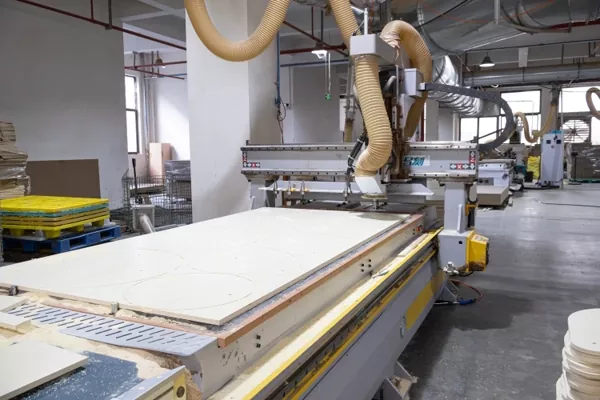
PETSBELLE reviews product design, materials, structure and potential production risks before manufacturing. Incoming materials, first samples, key processes, finished products and packaging can be checked against the confirmed specification.
Buyers should confirm inspection criteria, packaging tests, labeling and any certification requirements before production. Applicable FSC-certified wood or paper material options can be discussed, and certificate validity and scope should be verified for the specific order. Customer feedback is recorded and reviewed so corrective actions can address causes as well as individual cases.
OEM ODM and PETSBELLE Brand Cooperation
For higher-volume wholesale or private-label programs, PETSBELLE can evaluate OEM and ODM requests involving dimensions, materials, colors, accessories, labels, manuals and packaging. Feasibility and MOQ depend on the level of customization and the selected construction.
Buyers with smaller starting quantities can discuss representing the PETSBELLE brand and selecting from established products. This gives distributors and retailers a way to test a market with a coordinated product range before investing in deeper customization.
FAQ
What size cat tree should a buyer choose?
Match the structure to the intended room, cat profile and retail position. Compare the full dimensions, footprint, platform arrangement and access route rather than relying only on the words small, medium or large.
Are taller cat trees always better?
No. Height creates vertical territory, but usability also depends on platform spacing, resting areas, the relationship with the base and the way cats move through the structure.
Can PETSBELLE customize cat trees?
Yes. OEM and ODM options can be discussed for suitable volumes, including structure, materials, colors, accessories, branding and packaging.
Can wholesale buyers request samples?
Samples can be discussed so buyers can review appearance, materials, assembly and packaging before a bulk order. Sample cost and later order arrangements should be confirmed in the quotation.
What information should be included in an inquiry?
Share the target category, preferred dimensions, quantity, market, material or color direction, branding needs, packaging requirements and destination.
Explore Related Cat Tree Categories
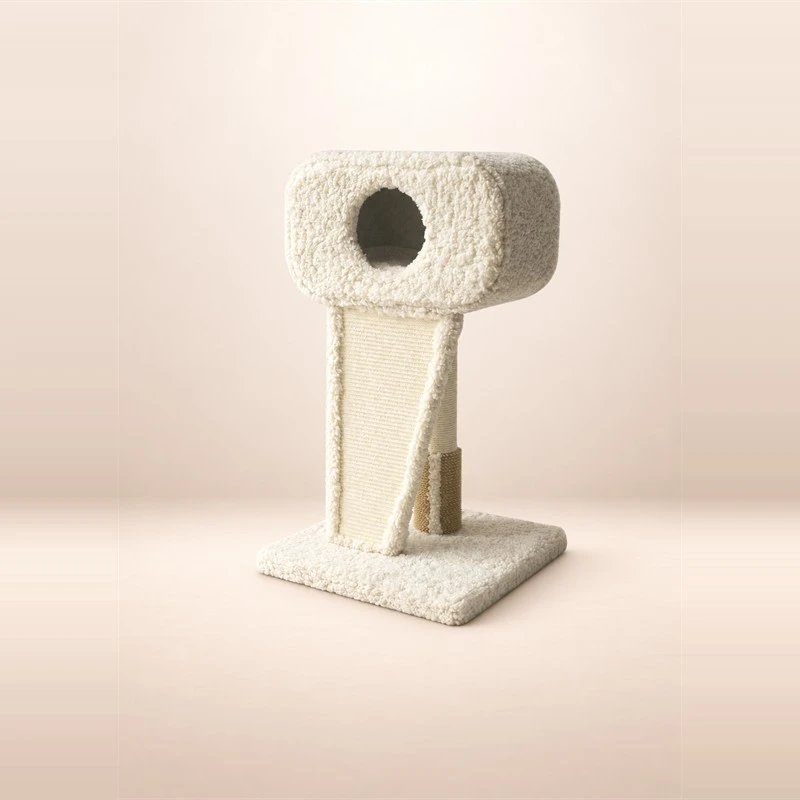
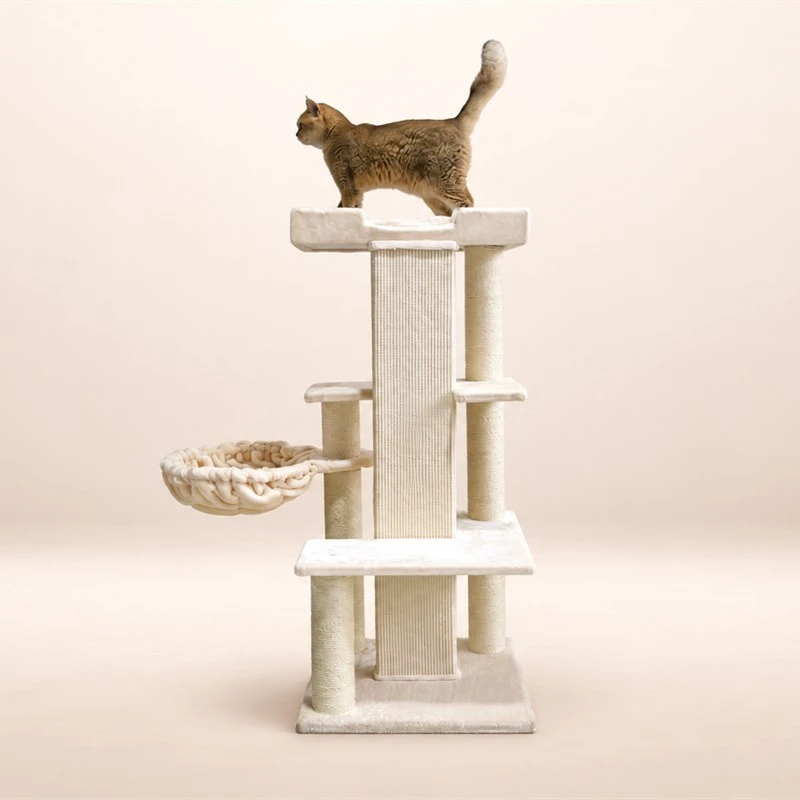
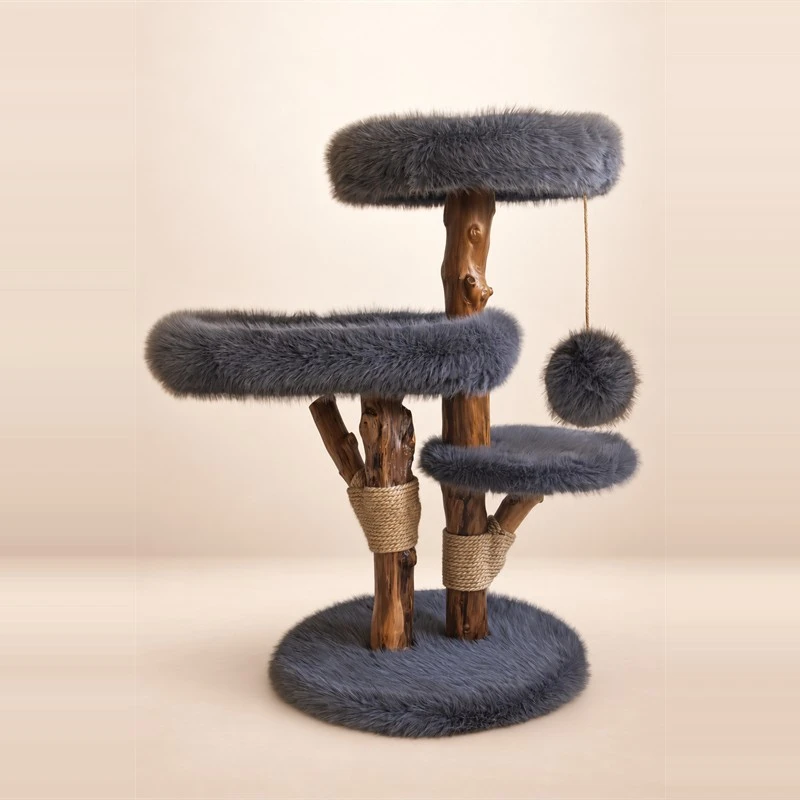
Browse Small Cat Trees for compact rooms and accessible entry-level collections, Medium Cat Trees for balanced everyday functions, and Large Cat Trees for taller multi-level layouts. These three phrases can be linked to the corresponding category pages to help buyers compare the range.
- View as
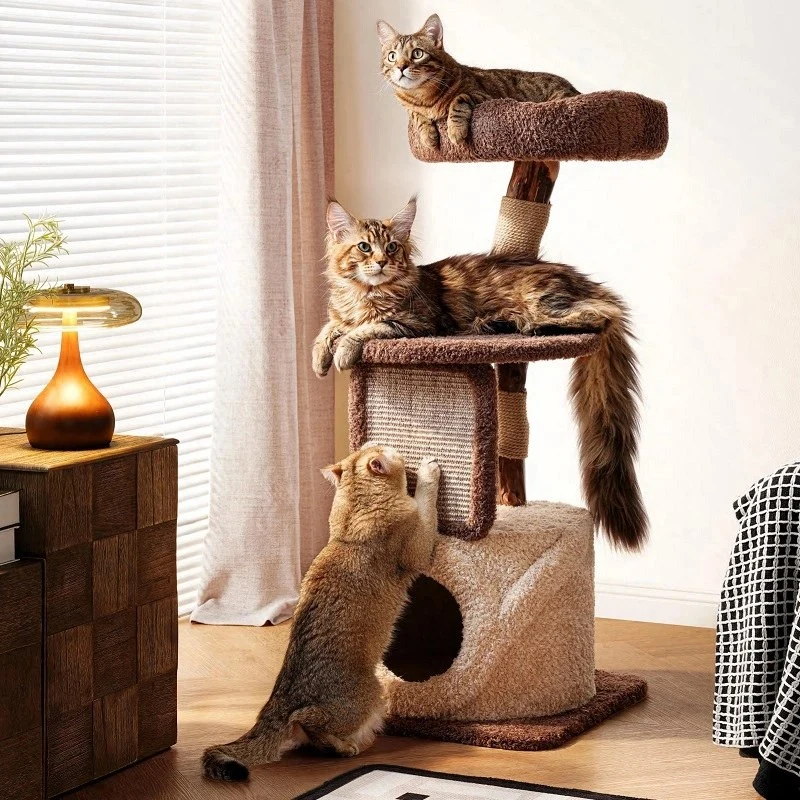
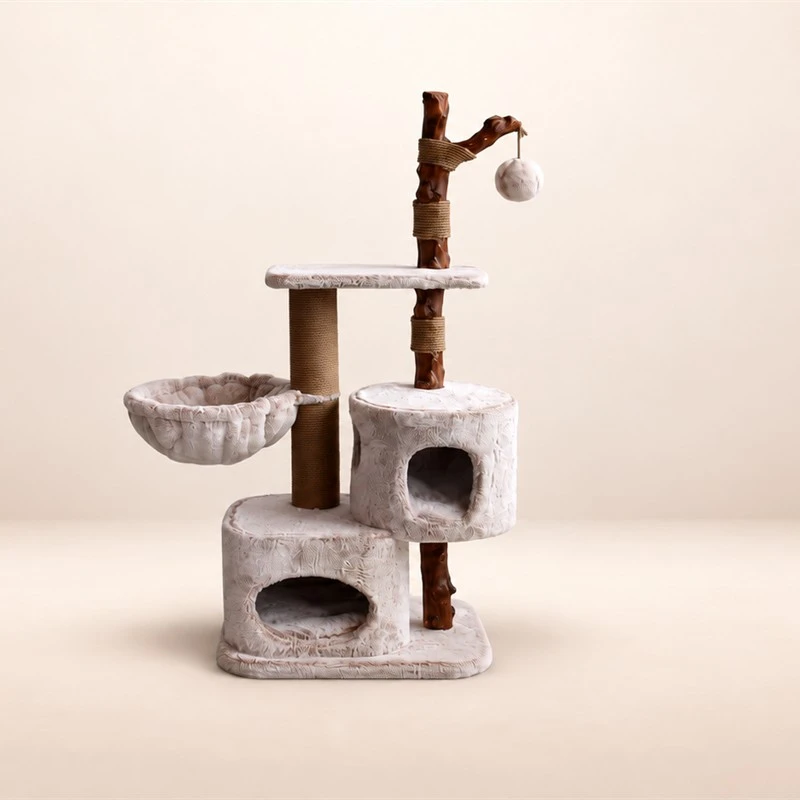
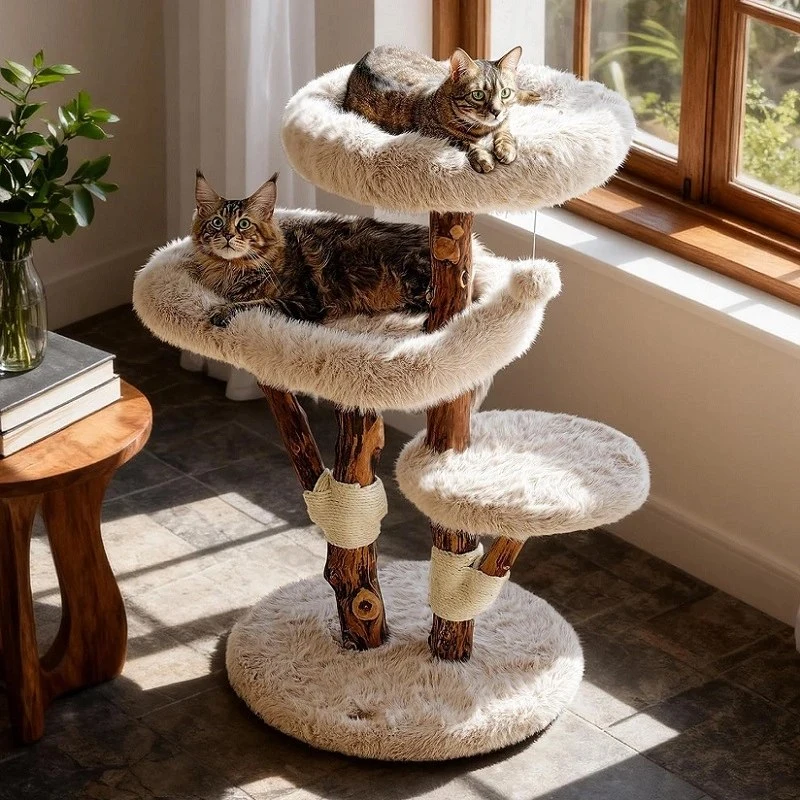
Modern Solid Wood Cat Tree with Condo
Sopapets PS4461 Modern Solid Wood Cat Tree with Condo for wholesale sourcing. Featuring natural wood posts, plush private condo, roomy platform, raised top perch and sisal scratching surfaces. Compact size 45×45×103 cm in cream and brown colourway, ideal for modern indoor cat furniture collections.
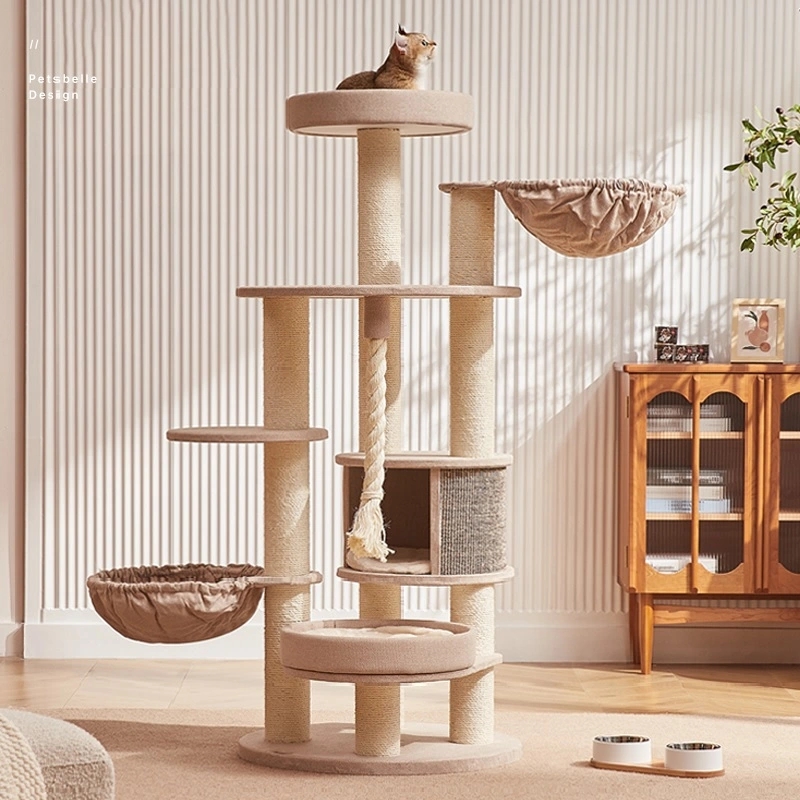
Solid Wood Cat Tower for Large Cats
Sopapets PS3843 Solid Wood Cat Tower for Large Cats supports wholesale and OEM sourcing with a 60 x 60 cm base, solid wood posts, large faux fox fur resting zones, removable cushions and sisal scratching surfaces in a compact 110 cm furniture-style design.
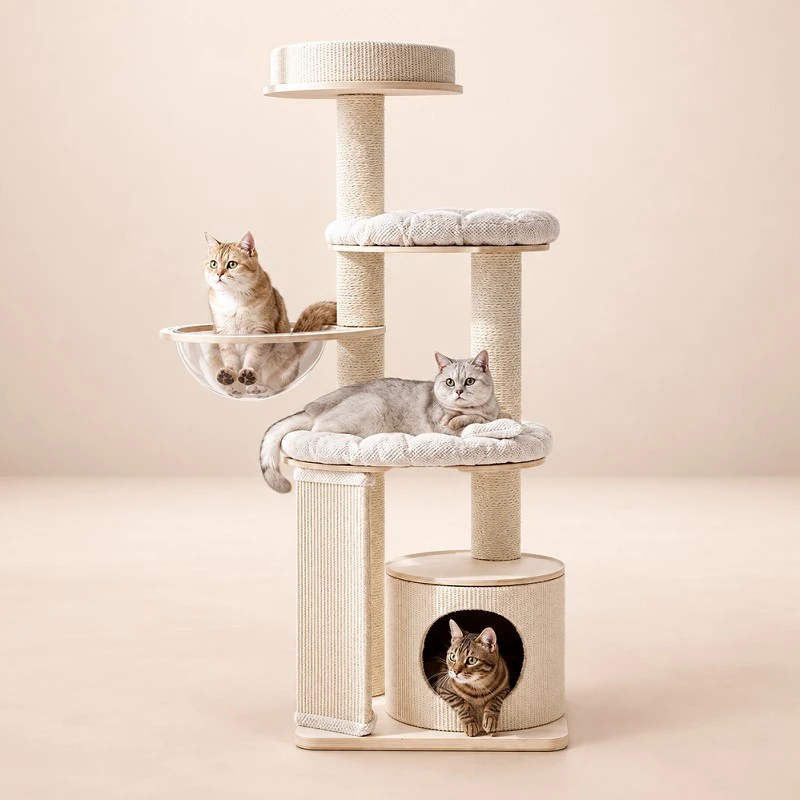
Extra Large Multifunctional Maine Coon Cat Tree
Sopapets PS447 Multifunctional Extra Large Multifunctional Maine Coon Cat Tree for wholesale sourcing. Featuring a 70 cm wide base, sofa fabric upholstery, multiple approx 45 cm resting zones and sisal scratching posts within its 164 cm tall vertical design. Ideal for large cats and multi-cat households.
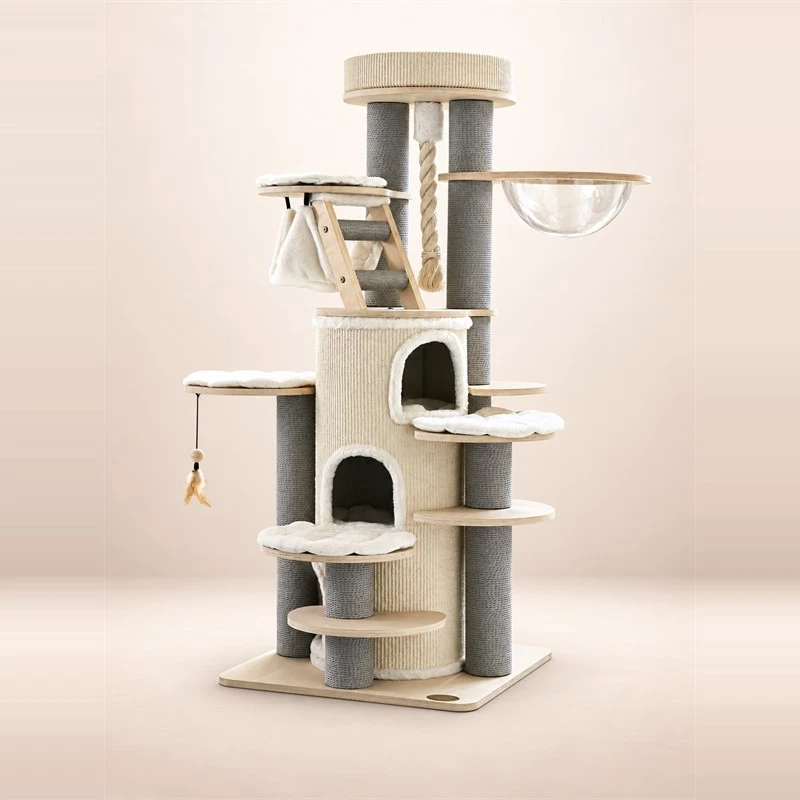
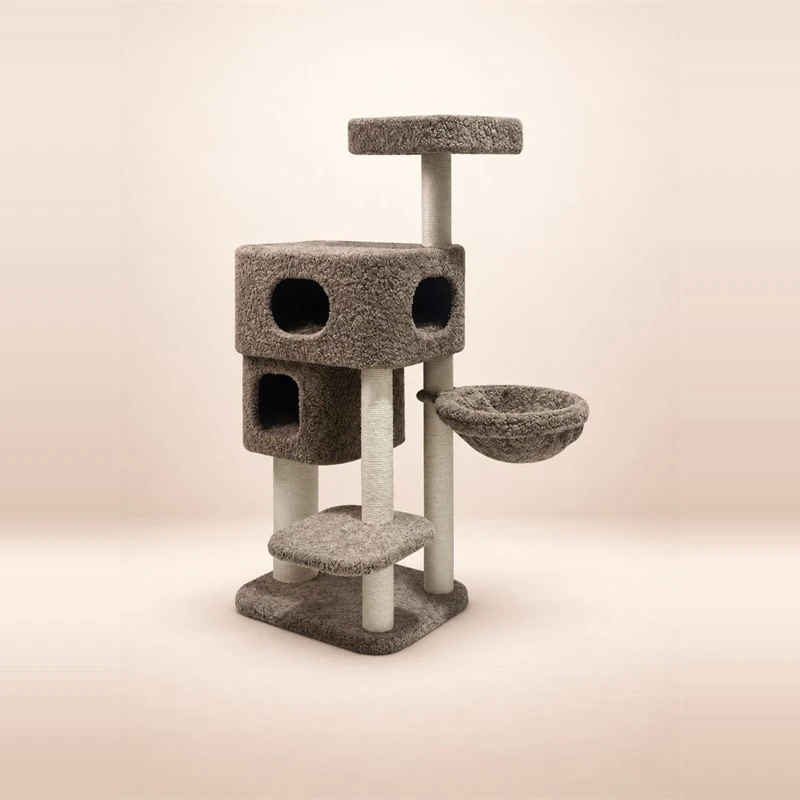
Heavy-Duty Solid Wood Cat Tree for Large Cats
Sopapets PS4533 Heavy-Duty Solid Wood Cat Tree for Large Cats is designed for wholesale buyers. Featuring wide resting platforms, a transparent space capsule nest, private cat condo, full-scale sisal scratching areas and removable soft cushions. The 152 cm modern structured tower perfectly fits large cats and multi-cat households.
Multi-Level Cat Tree with Dual Beds and Basket Hammock
PETSBELLE offers wholesale Multi-Level Cat Tree with Dual Beds and Basket Hammock designs. This taupe cat tower combines two enclosed condos, a side basket and an elevated top perch. Wrapped scratching posts and a lower platform bring resting, scratching and climbing areas into one indoor furniture piece. The platform load capacity is 10 kg per platform. Order lead time is 45 days after order placement.
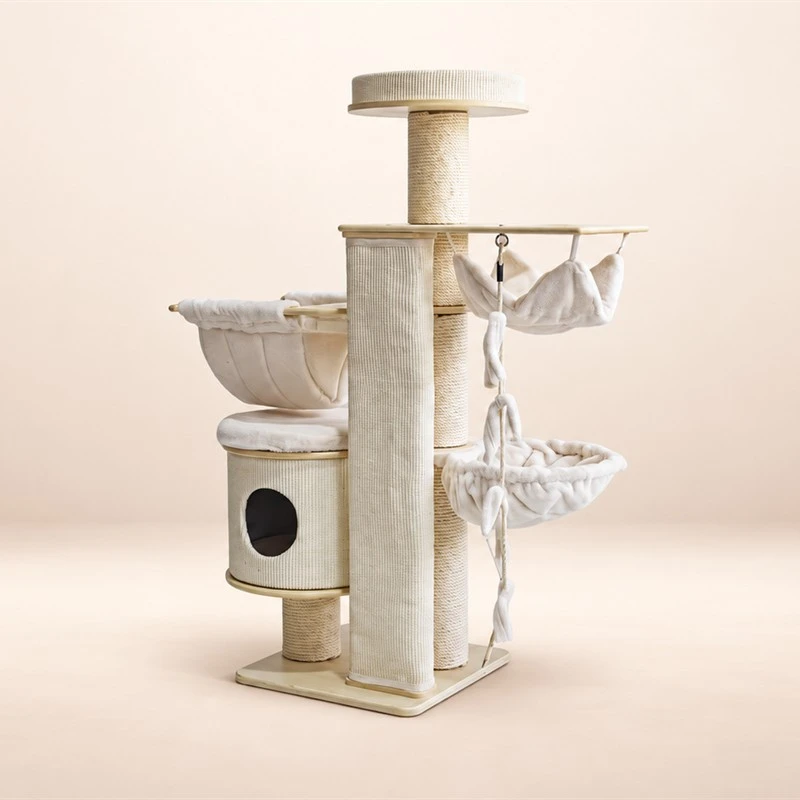
Cream Cat Tower with Multiple Hammocks and Vertical Scratching Board
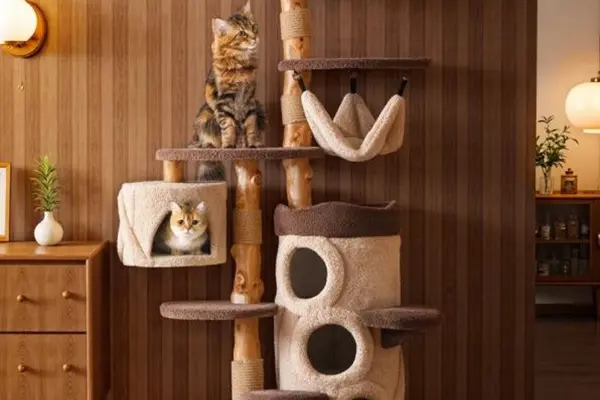
PETSBELLE offers wholesale supply of the Cream Cat Tower with Multiple Hammocks and Vertical Scratching Board. This multi-level cat tree brings basket hammocks, a hanging fabric bed and a round condo together with a raised top perch. Cream textiles and pale board edges create a coordinated indoor furniture look. The platform load capacity is 10 kg per platform. Order lead time is 45 days after order placement.
With an experienced sales team, technical staff and after-sales follow-up, Petsbelle supports repeat Cat Trees programs for brands, importers and wholesalers.
News Recommendations